
Furniture Era Guide: How to Place Your Pieces in Time
Dating furniture by era helps you understand what you own and whether it's genuinely old or a later reproduction. This guide walks through the visual markers that place pieces in their correct time period—from joinery methods to hardware styles—and shows you how to use those clues to narrow down when something was made.
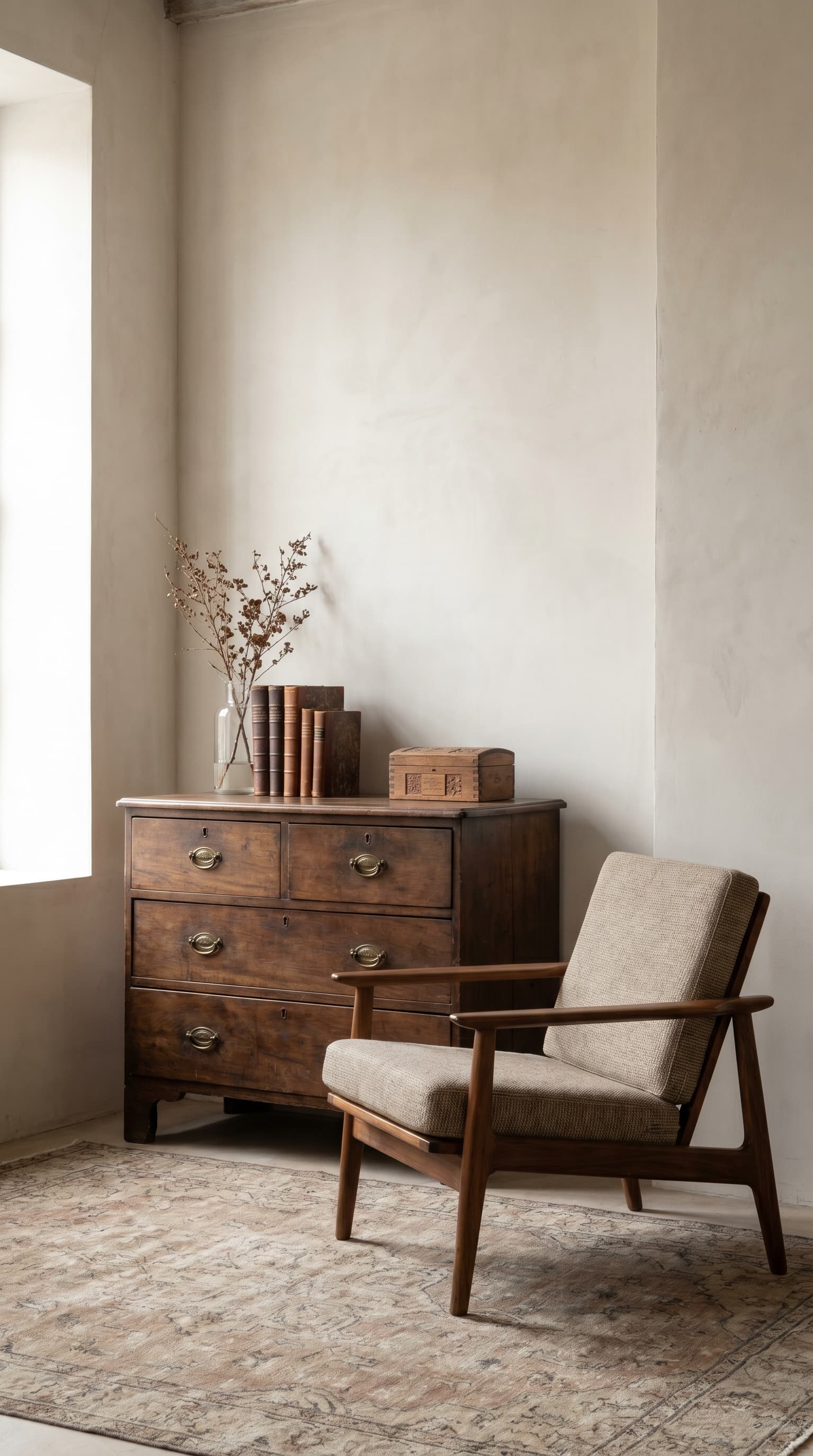
Furniture Era Guide: How to Place Your Pieces in Time
When you're trying to figure out what you own, the question isn't always "What style is this?" Sometimes it's "When was this actually made?" A furniture era guide helps you place pieces in time using construction clues, materials, and hardware—not just decorative style. Because a chair can look Victorian but be built with 1920s techniques, or carry Federal-style lines but show mid-century joinery.
Understanding furniture eras means learning to read the physical evidence your piece leaves behind. This guide focuses on the markers that help you date furniture accurately, spot reproductions, and connect what you see to a specific window of time.
What You're Actually Trying to Date
When collectors talk about furniture eras, they're usually layering three things:
Time period: The decades or centuries when a piece was built—Georgian era, Victorian era, Mid-Century Modern era.
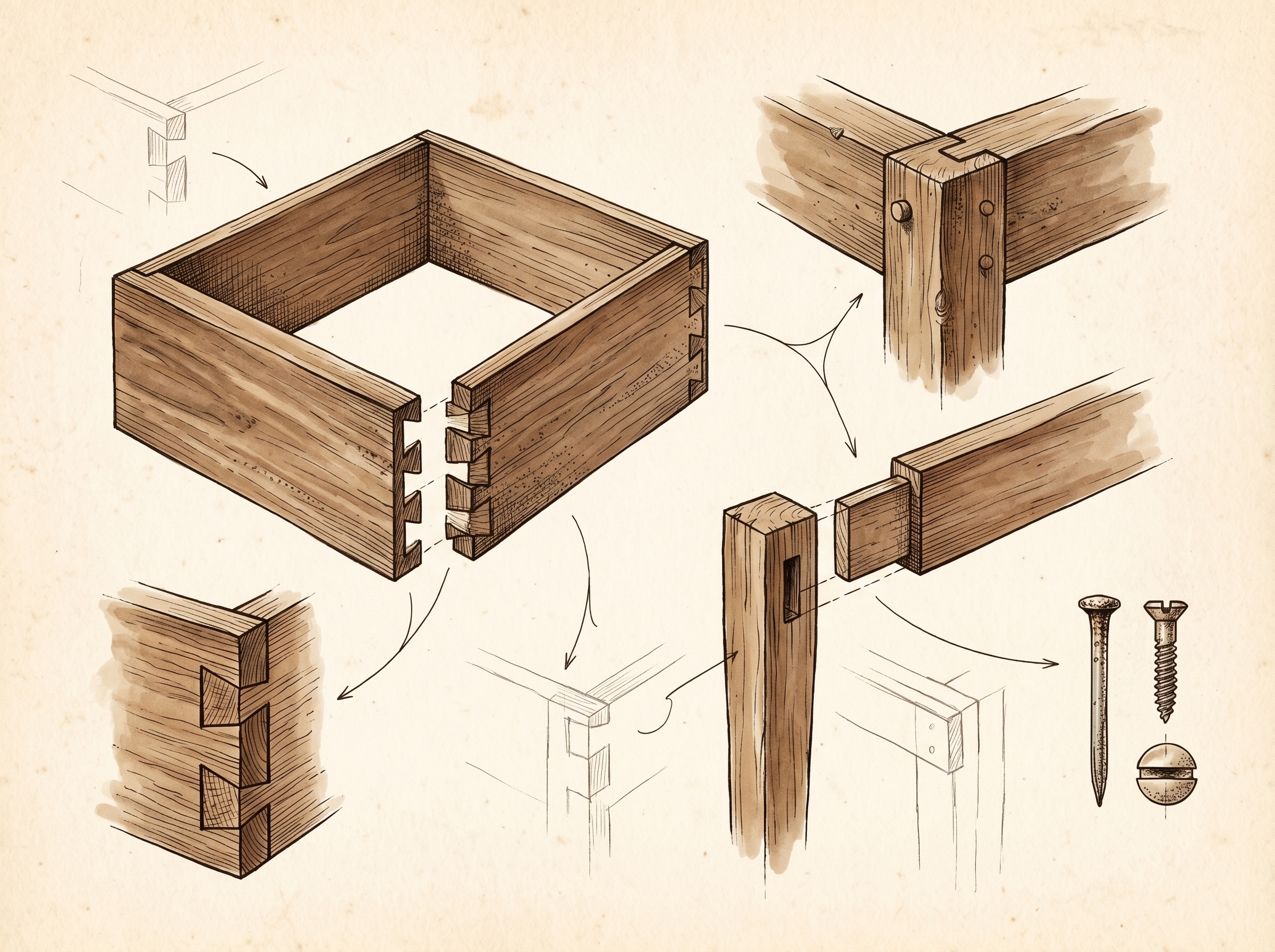
Construction methods: How it was made. Hand-cut dovetails versus machine-cut. Mortise-and-tenon joints versus dowels. Pit-sawn lumber versus circular saw marks.
Material and hardware: What it's made from and what holds it together. Wrought iron nails, hand-forged hinges, stamped brass pulls, or zinc-plated screws all point to different windows of production.
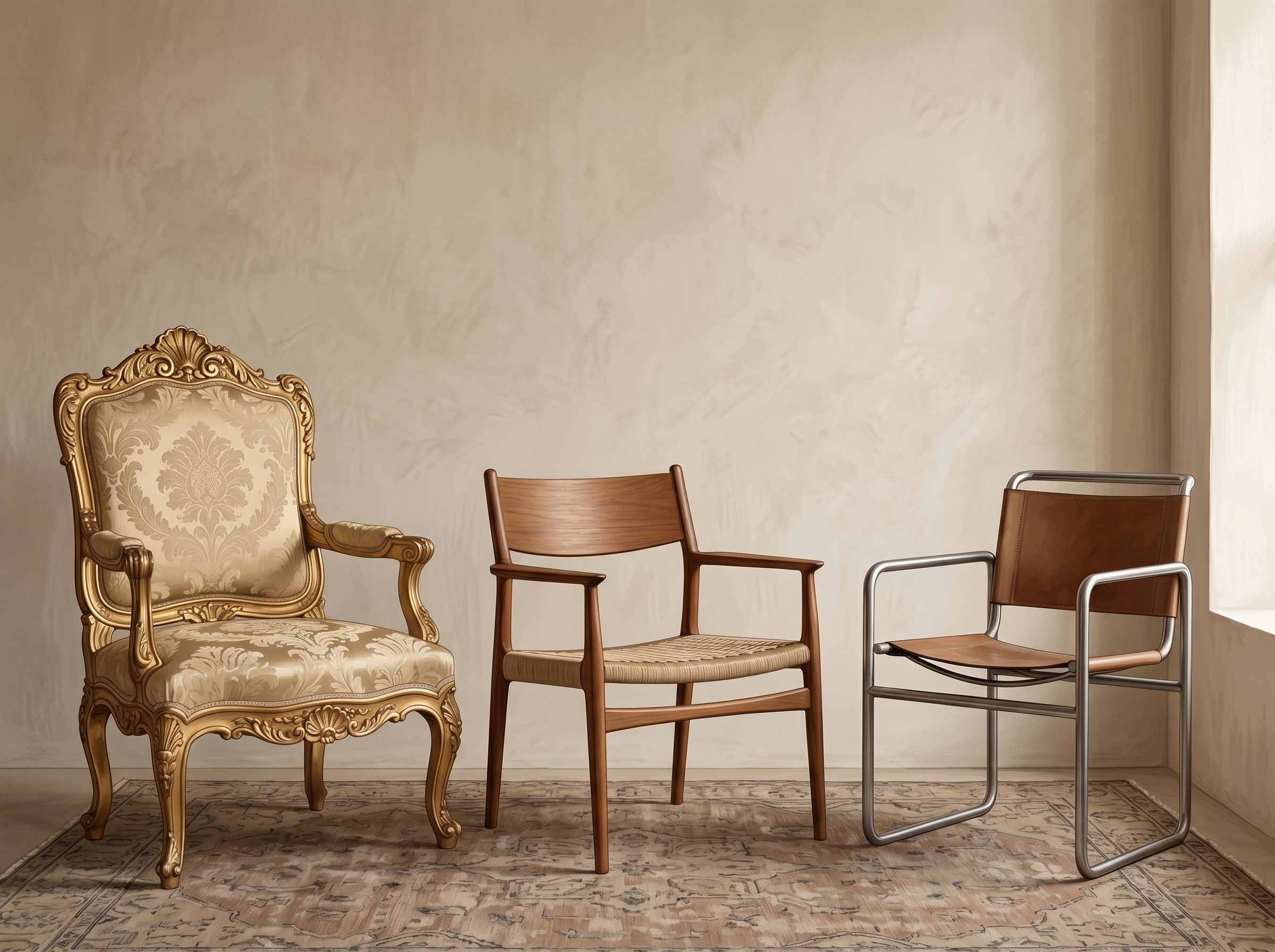
Style can overlap eras. A Chippendale-style chair made in 1780 uses different joinery and materials than a Chippendale revival piece from 1880. The furniture era guide approach prioritizes when it was built over what it looks like.
Visual Clues That Place Furniture in Time
Here's what to look for when you're trying to date a piece by era:
Joinery and construction
Hand-cut dovetails with irregular spacing suggest pre-1860s work. Uniform, machine-cut dovetails appear after the 1860s. Through-tenon joints visible on chair backs or table legs point to earlier construction. Dowel joints and glue blocks show up more frequently after 1850. If you see staples or pneumatic fasteners, you're looking at 20th-century work.
Saw marks and wood preparation
Pit-sawn or hand-planed wood shows irregular surface texture and is typical before the 1840s. Circular saw marks—curved blade arcs—appear after the 1830s but become standard by the 1850s. Band saw marks (straight, fine lines) show up after the 1880s. Plywood and veneer glued with modern adhesives point to post-1900 manufacture.
Hardware and fasteners
Hand-forged nails with irregular heads and hand-filed edges date before 1800. Cut nails with rectangular shafts and off-center heads were standard from 1800 to 1890. Wire nails—round and uniform—became common after 1890. Brass hardware with visible file marks is often pre-1840. Cast or stamped pulls with crisp, identical details are later. Screws with uneven threads and off-center slots are pre-1850; machine-made screws with sharp threads and centered slots are post-1850.
Wood selection and secondary woods
Primary wood choice can hint at era. American makers favored walnut before 1700, then mahogany from 1750–1830, then walnut and rosewood through the Victorian period. Oak dominated after 1880. Secondary woods (drawer sides, backs) matter too: yellow pine in American pieces often signals Southern origin and pre-1900 work. Poplar, basswood, and chestnut were common secondary woods in different regions and eras.
Finish and patina
Shellac finishes were standard before 1920. Lacquer became common in the 1920s–30s. Polyurethane is post-1950s. Patina—natural darkening, wear at high-touch points, oxidation—develops over decades. New finishes on old wood can mean refinishing, but authentic untouched surfaces show consistent aging.
Common Furniture Era Confusions
Even experienced collectors mix up eras when visual style and actual age don't match.
Revival styles made decades later
Colonial Revival furniture from 1900–1940 mimics 18th-century forms but uses 20th-century joinery, screws, and materials. Gothic Revival pieces from the 1840s echo medieval design but show Victorian-era construction. If the style feels older than the hardware and joinery suggest, it's likely a revival piece.
Marriages and replacements
A table base from 1820 paired with a top replaced in 1920 creates a confusing hybrid. Drawer pulls swapped out in the 1950s make a Victorian dresser look Mid-Century. Check whether all components show the same joinery, wood aging, and hardware style. Mismatched elements usually mean the piece has been altered.
Export and import timing
English furniture imported to the U.S. in 1900 might be built in 1780, but the nails holding a later repair, the shipping labels, or added brackets can mislead you. Continental European pieces often carry different construction traditions that don't align with American or British era markers.
Reproduction versus period
A well-made reproduction from 1950 can fool you if it uses traditional joinery and hand-planed wood. The giveaway is usually in the details: modern glue, uniform screws, or a finish that doesn't match the supposed age. Reproductions are valuable in their own right, but knowing the true era matters for pricing and identification.
How Photo Identification Narrows Down the Era
When you're working from photos, the furniture era guide approach relies on capturing the details that date a piece.
Photograph the joinery
Get close-ups of dovetails on drawer fronts, mortise-and-tenon joints on chair legs, and corner blocks inside case pieces. Clear photos of joinery let you (or an identification tool) distinguish hand-cut from machine-cut work.
Capture hardware and fasteners
Photograph hinges, pulls, escutcheons, and any visible nails or screws. Include shots of the backs and undersides where original fasteners are more likely to survive. Hardware is one of the fastest ways to narrow a piece to a specific window.
Show the wood and surfaces
Photograph the grain, any tool marks, and areas of natural wear. Include the underside of tables, drawer sides, and the backs of cabinets where secondary woods and unfinished surfaces reveal more about age and origin.
Document labels, stamps, and marks
Any maker's mark, retailer label, patent date, or shipping stamp helps confirm era. Even a penciled date or a fragment of old newspaper lining a drawer can place a piece in time.
For a broader look at how to use visual clues to name and classify furniture, see our Furniture Style Guide: How to Identify and Name Your Pieces. If you're focused specifically on dating vintage pieces by decade, check out Vintage Furniture Eras: How to Date Your Pieces by Decade.
Let Tocuro Date Your Furniture from Photos
Dating furniture by era takes practice, and the details matter. Tocuro's photo-based identification helps you move past guesswork by analyzing joinery, hardware, materials, and construction markers to place your pieces in the right time period. Upload a photo and get an identification that narrows down era, style, and estimated value range.
Identify Your Item and see what the details reveal about when your furniture was actually made.
Photo identification
Identify Your Furniture
Use Tocuro to identify your item from a photo and get an estimated value range when market data is available.