
China Marks Identification: How to Find and Read Porcelain Maker's Marks
China marks can reveal maker, pattern, and production era—but only if you know where to look and how to interpret what you find. This guide walks you through locating marks on porcelain and fine china, understanding what those marks can and cannot tell you, avoiding common misreads, and using clear photos to get reliable identifications.
Finding Marks on Your China
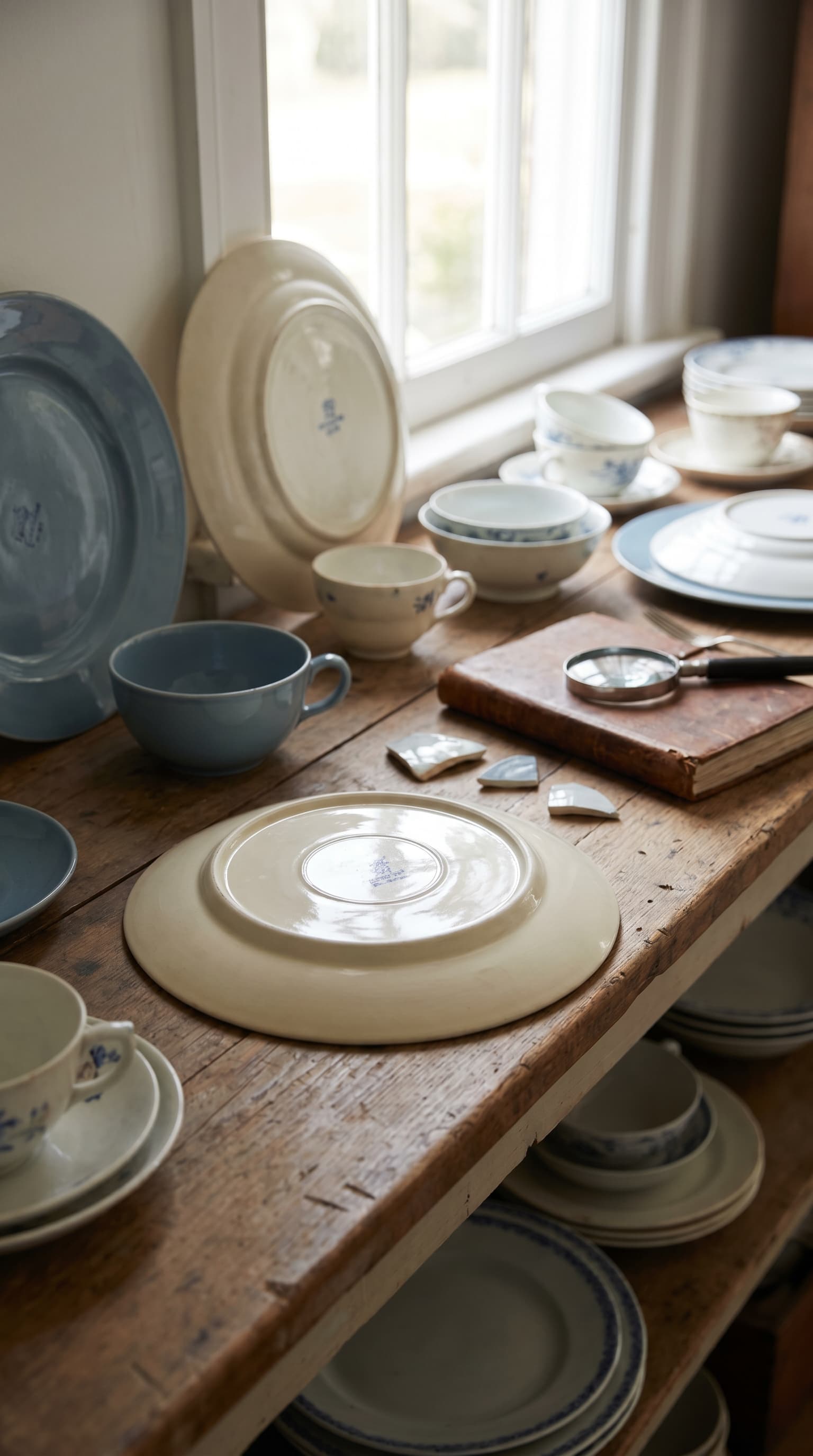
China marks identification starts with knowing where to look. Most porcelain and fine china pieces carry marks on the base, but the exact location and visibility depend on the manufacturer and production period.
Check the base first. Turn plates, bowls, and serving pieces upside down. Marks typically appear in the center of the foot rim or flatware base, often stamped, painted, or impressed into the glaze. Some makers used underglaze stamps that sit beneath a glossy surface, while others applied overglaze marks that you can feel with your fingertip.
Look for multiple marks. You might find a maker's mark alongside a pattern name, date code, or retailer stamp. British makers often combined a company logo with a pattern number and registration mark. American china frequently shows both the manufacturer and the store or importer that commissioned the pattern.
Examine handles and rims. Teacups, pitchers, and covered dishes sometimes carry secondary marks on handles or interior rims, especially when the base is unglazed or footed. Lid interiors can also show matching marks or assembly numbers.
Check for faint impressions. Older pieces may have marks worn down by decades of handling or cleaning. Tilt the piece under angled light to catch shallow stamps or faded ink.
If you're working with a full set, check multiple pieces. Marks can vary within the same service if items were produced across different years or factories.
What China Marks Can and Cannot Tell You
A clear mark can answer specific questions about your porcelain, but it won't reveal everything collectors hope to learn.
Marks often confirm:
- •Manufacturer identity. Company names, logos, and monograms identify who made the piece.
- •Country of origin. Phrases like "Made in England," "Germany," or "Japan" narrow production location and comply with trade marking laws.
- •Pattern name or number. Many marks include the decorative pattern designation, helpful when searching for replacements or researching value.
- •Production era. Date codes, backstamp style changes, and specific logos help place a piece within a decade or production range.
Marks rarely provide:
- •Exact production date. Most marks indicate a range—sometimes spanning decades—rather than a specific year.
- •Current market value. A prestigious maker's mark doesn't guarantee high resale prices. Condition, pattern desirability, and current demand matter more.
- •Authenticity guarantees. Fakes and reproductions copy famous marks. A mark alone can't confirm authenticity without examining paste quality, glaze character, and construction details.
- •Complete provenance. Marks don't reveal previous owners, special commissions, or exhibition history unless accompanied by documentation.
Some valuable pieces carry no mark at all. Early porcelain, artist-signed studio work, and certain high-end European makers often left pieces unmarked, relying on form and quality to signal origin.
Common China Marks Identification Mistakes
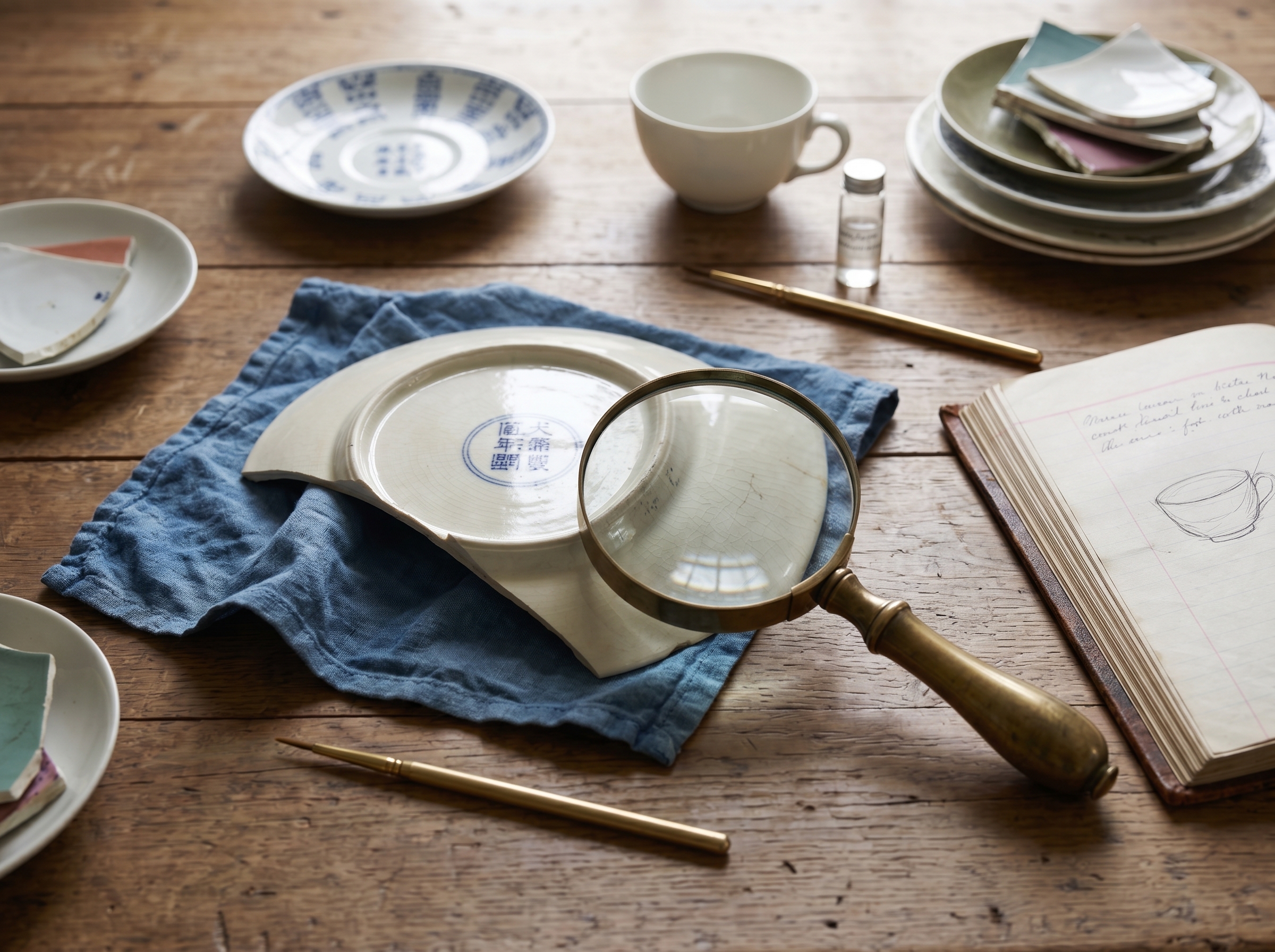
Misreading marks leads to incorrect attributions and missed details. Here's what trips up collectors:
Confusing country names with makers. "Bavaria" isn't a manufacturer—it's a German region where hundreds of porcelain companies operated. The same applies to "Nippon" (Japan), "Prussia," and "Austria." Look for the actual maker's name or logo accompanying the country designation.
Assuming "Made in [Country]" means old. U.S. customs law required country-of-origin marks starting in 1891, so "Made in Japan" or "Made in England" indicates post-1891 production. Earlier pieces often show only the maker's name or no mark at all.
Misreading initials and monograms. Stylized letters overlap, curve, and stack in ways that make them easy to mistake. "RC" might be Royal Crown Derby or R.C. Versailles. Context clues like accompanying symbols, crown shapes, and typography style matter.
Overlooking date code systems. Wedgwood, Royal Doulton, and other major makers used date codes—letters, numbers, or symbols that indicate production year. Without knowing the system, these marks look like random characters.
Trusting marks on obvious reproductions. Modern manufacturers copy historic marks on decorative pieces. If the porcelain body looks too bright, the glaze too glossy, or the decoration too crisp, the mark alone shouldn't convince you.
Ignoring mark variations over time. Major companies changed backstamps every few decades. A slightly different crown, font, or border can shift the production date by thirty years.
Similar to pottery marks identification, china marks require context beyond just the symbol itself.
How Clear Photos of China Marks Improve Identification Results
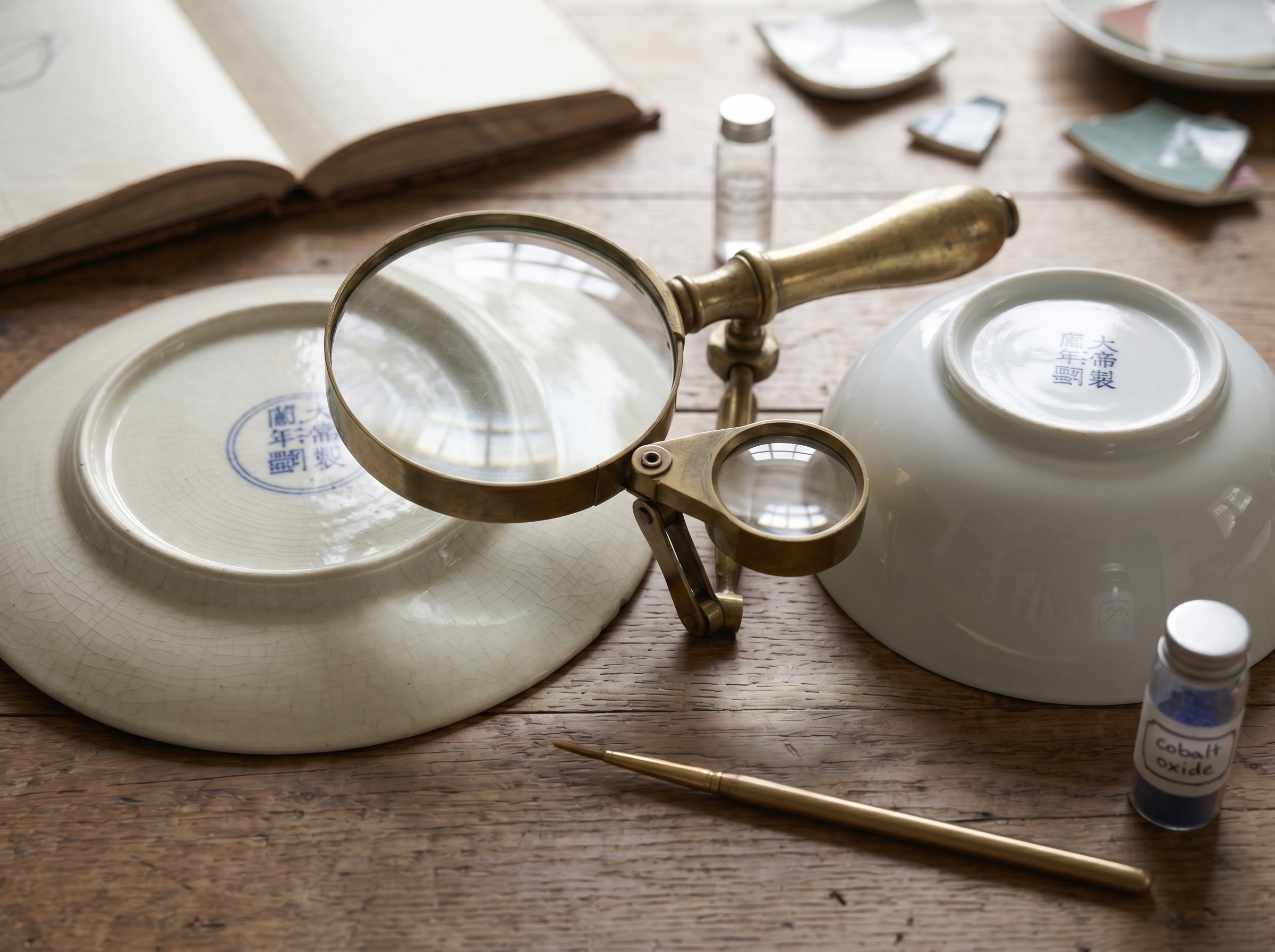
A good photo captures details your eyes might miss and enables accurate identification without hauling fragile porcelain to an appraiser.
What makes a useful mark photo:
- •Sharp focus on the entire mark. Blur obscures small letters, date codes, and symbol details. Use your phone's macro or portrait mode if available.
- •Even, bright lighting. Natural daylight or a white LED lamp prevents shadows that hide faint impressions. Avoid flash glare on glossy surfaces.
- •Straight, overhead angle. Shooting at an angle distorts text and makes initials harder to read. Hold your phone parallel to the base.
- •Full context. Include the entire backstamp area, not just the central logo. Pattern numbers, country marks, and secondary stamps sit at the edges.
- •A second photo showing the object itself. Seeing the piece's form, glaze color, and decoration style helps confirm era and authenticity when paired with the mark.
If the mark includes multiple elements—a logo, pattern name, and date code—capture them all in one frame. If they're spread across the base, take a second photo to show the full layout.
When working with Tocuro, submit both the mark photo and a photo of the whole piece. The combination of maker's mark and visible characteristics provides faster, more reliable identification. Unlike silver hallmarks identification, which relies heavily on tiny stamped symbols, china marks benefit from seeing the object's overall style and quality alongside the backstamp.
Get Your China Identified
You don't need to dig through reference books or post blurry photos on collector forums. Tocuro identifies china from photos, giving you maker details and estimated value ranges based on current market signals—not outdated price guides.
Upload clear photos of your mark and the piece itself. You'll get 7 free identifications per day, and the count resets daily. No formal appraisal required. Just practical answers for collectors who want to know what they own.
Identify your china now and see what your marks reveal.
Photo identification
Identify a China Mark
Use Tocuro to identify your item from a photo and get an estimated value range when market data is available.