
Buying Antique Furniture Tips: What Actually Matters Before You Pay
A practical guide to buying antique furniture that cuts through generic advice. Learn what to inspect on the spot, which red flags demand research, and how to identify pieces quickly using photos before making an offer.
When You're Standing in Front of a Piece You Want
You're at an estate sale, antique shop, or someone's garage. There's a piece that caught your eye—maybe a Victorian settee, an oak sideboard, or a walnut dresser with original hardware. You've got minutes, not hours, to decide if it's worth your money. These buying antique furniture tips aren't about becoming an overnight expert. They're about knowing what to check fast and what questions actually protect your wallet.
Most buying guides tell you to "look for quality" or "check the provenance." That's not wrong, but it's not actionable when you're standing there with a seller who's already talking to someone else.
Buying Antique Furniture Tips for the First Five Minutes
Your first job is spotting deal-breakers. These are problems you can see or feel without tools, expertise, or a magnifying glass.
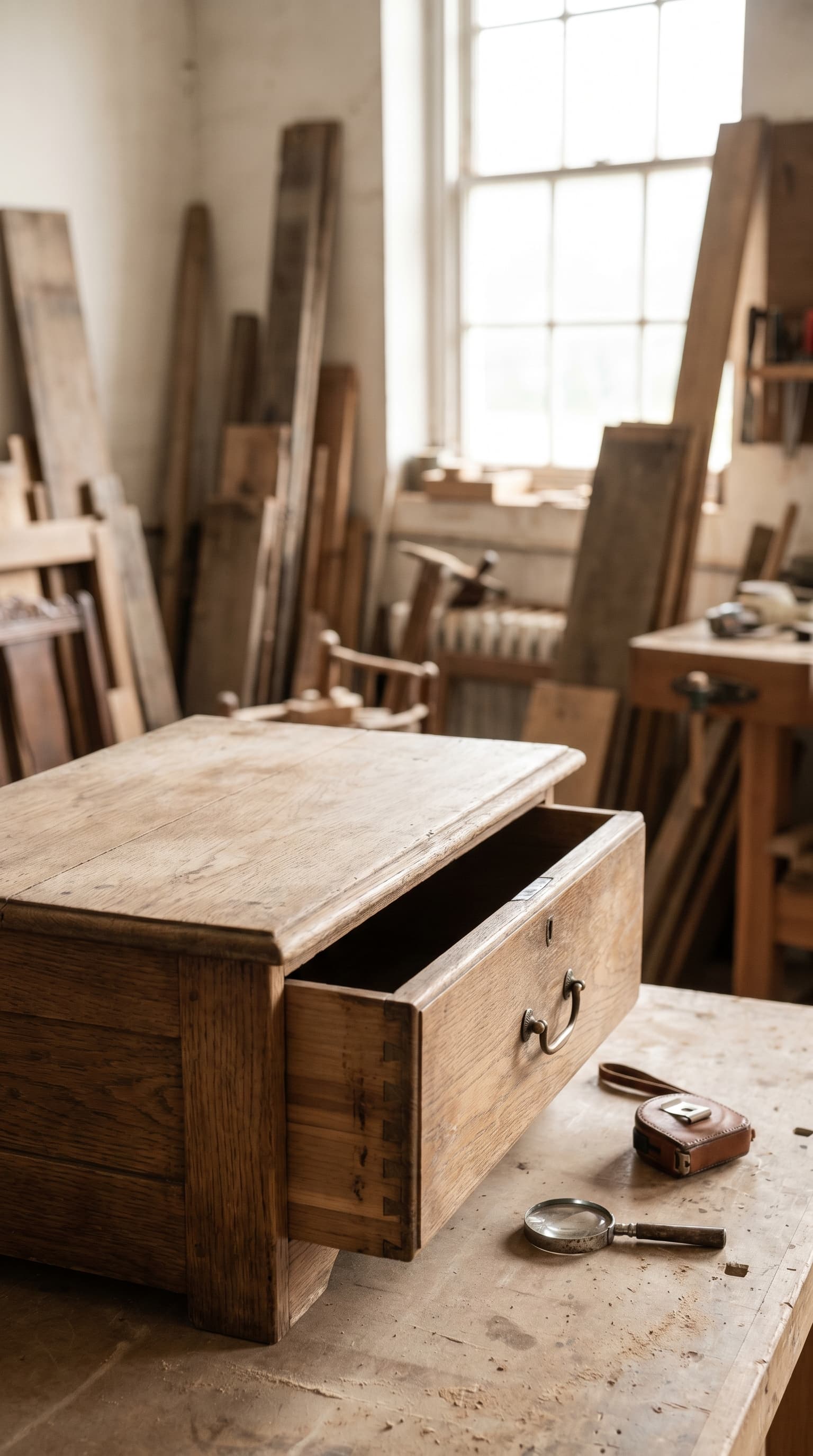
Pull out drawers completely. Check the dovetails—hand-cut joints look irregular, with wider spacing and slight variations in size. Machine-cut dovetails (post-1860s) are uniform and evenly spaced. Look at the drawer bottoms: are they single boards or plywood? Plywood means mid-20th century at earliest.
Flip it over or look at the back. Unfinished backs and bottoms are normal, but check the wood itself. Old secondary wood (the stuff you don't see) often shows circular saw marks before the 1880s or rough hand-planing. Straight, uniform planer marks suggest later manufacture.
Test everything that moves. Drawers, doors, hinges, casters. Wobbly legs or sticky drawers aren't always disasters, but you need to know what you're inheriting. A drawer that won't open might hide a replaced bottom or broken runner. A loose leg could mean the mortise-and-tenon joint is shot—repairable, but not cheap.
Smell it. Musty, moldy odors can indicate water damage deep in the wood. Strong chemical smells might mean a recent refinish that stripped original patina. Both affect value.
Look for patches, filled holes, or mismatched wood. Old repairs are part of a piece's history. Sloppy modern repairs or attempts to hide damage are red flags. Run your hand over surfaces—you'll feel puttied areas even when they're stained to match.
What's Worth Researching (and Photographing) Before You Buy
Some questions can't be answered on the spot, but they're worth delaying a purchase if the price is substantial. If you're considering a piece over $500, take photos and do some quick homework.
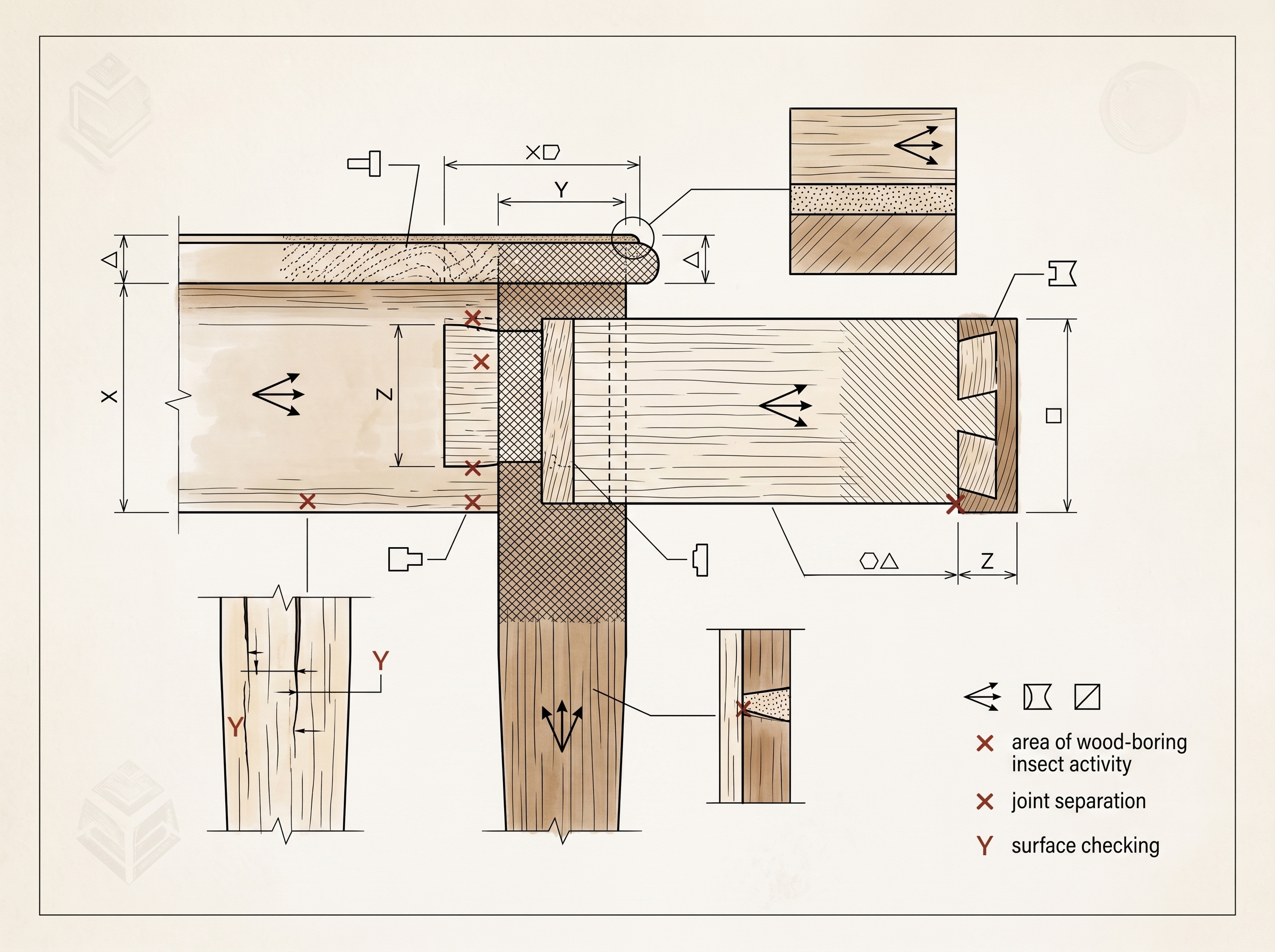
Is the style period-correct for the claimed age? A "Queen Anne" table with Victorian hardware is either a later reproduction or heavily modified. Snap photos of joinery details, hardware, and any maker's marks or labels. Identifying antique furniture from photos can confirm whether proportions, construction, and details align with the stated period.
What's the actual market value range? Asking prices at shops and estate sales often reflect optimism more than reality. Taking a few clear photos and getting a quick value estimate helps you know whether you're looking at a fair deal or a 200% markup. Tools like Tocuro's furniture identification service let you upload photos and get an estimated value range based on current market signals—no formal appraisal needed, just a reality check before you negotiate.
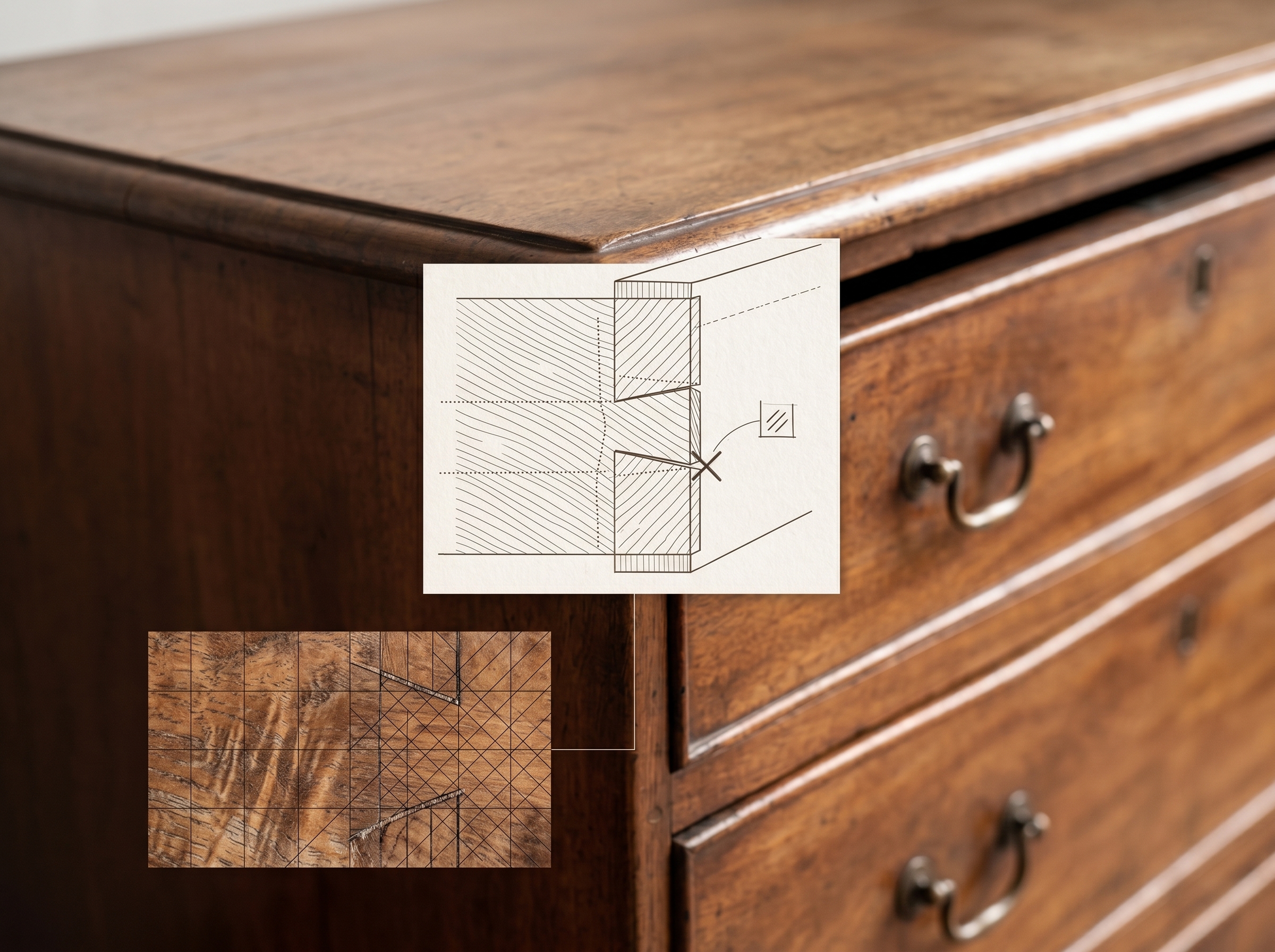
Are there signs of major restoration? New veneer, replaced feet, rebuilt tops—all of these affect value differently depending on how well they were done and whether the seller disclosed them. Photograph anything that looks inconsistent: different wood grain, mismatched stain color, or hardware that doesn't match in style or patina.
Is the piece actually antique? Reproductions and "antique-style" furniture flood the market. Photos of construction details—drawer backs, underside joinery, saw marks on secondary wood—reveal more than any seller's story. Even a few quick shots can help you tell a 1920s piece from a 1990s knockoff.
Buying Antique Furniture Tips for Different Shopping Scenarios
Estate sales and auctions demand speed. You often can't return, and you're bidding against others. Prioritize the deal-breaker checks: structure, obvious damage, functionality. If it passes those tests and the price is reasonable, you can research finer points afterward.
Antique shops and dealers usually allow more time and negotiation. Use that. Ask questions. Request condition reports if the piece is expensive. Take photos and compare to online market listings before you commit.
Online purchases are the hardest. You're entirely dependent on photos and descriptions. Request additional images of joinery, backs, undersides, and any damage. Ask for measurements of drawer depths, leg heights, and interior dimensions—reproductions often get proportions slightly wrong. If the seller won't provide more photos, walk away.
How Tocuro Fits Into Smarter Furniture Buying
When you're considering a purchase, speed matters. You don't have time to email photos to three appraisers and wait days for responses. Tocuro helps you identify what you're looking at and get an estimated value range within minutes, not weeks.
Snap photos of the piece from multiple angles—front, back, joinery details, any marks or labels. Upload them to Tocuro's identification tool. You'll get information on style, likely age range, and construction clues that help you make faster, better-informed decisions. The estimated value reflects current market signals, giving you a baseline for negotiation. It's not a formal appraisal, but it's exactly what you need when you're standing in a shop deciding whether to make an offer.
Tocuro works for more than just furniture, so if you're looking at decorative objects, lighting, or other antiques in the same space, you can identify and check values for those too. You get 7 free identifications per day, and the count resets daily—plenty of runway for a focused shopping trip.
What Experienced Buyers Skip (and What They Never Do)
Experienced collectors don't obsess over every scratch or minor veneer lift. Antique furniture has lived a life. What they never skip: structural soundness, authenticity of major components (top, legs, case), and alignment between the asking price and realistic market value.
They also don't buy based on love alone when the price is high. Emotion is fine for a $50 side table. For a $2,000 cabinet, you need cold assessment: condition, provenance, market demand, and whether you're prepared to own it even if the value doesn't appreciate.
Ready to Check What You're Considering?
Whether you're at an estate sale right now or planning a weekend antiquing trip, identify your furniture and get an estimated value before you commit. Clear photos of the details that matter—joinery, hardware, maker's marks, any damage—give you the information you need to buy smarter, negotiate better, and avoid the regrets that come from impulse purchases.
Buying antique furniture isn't about memorizing centuries of design history. It's about knowing what to check, which red flags demand more research, and when the price actually makes sense. With a few photos and a few minutes, you can turn uncertainty into confidence.
Photo identification
Identify Your Furniture
Use Tocuro to identify your item from a photo and get an estimated value range when market data is available.