
Antique vs Vintage Furniture: How to Tell the Difference
Understanding whether your furniture qualifies as antique or vintage matters for valuation, insurance, and resale. This guide breaks down the age requirements, visual markers, and identification strategies that help you accurately classify pieces before determining their worth.
Antique vs Vintage Furniture: How to Tell the Difference
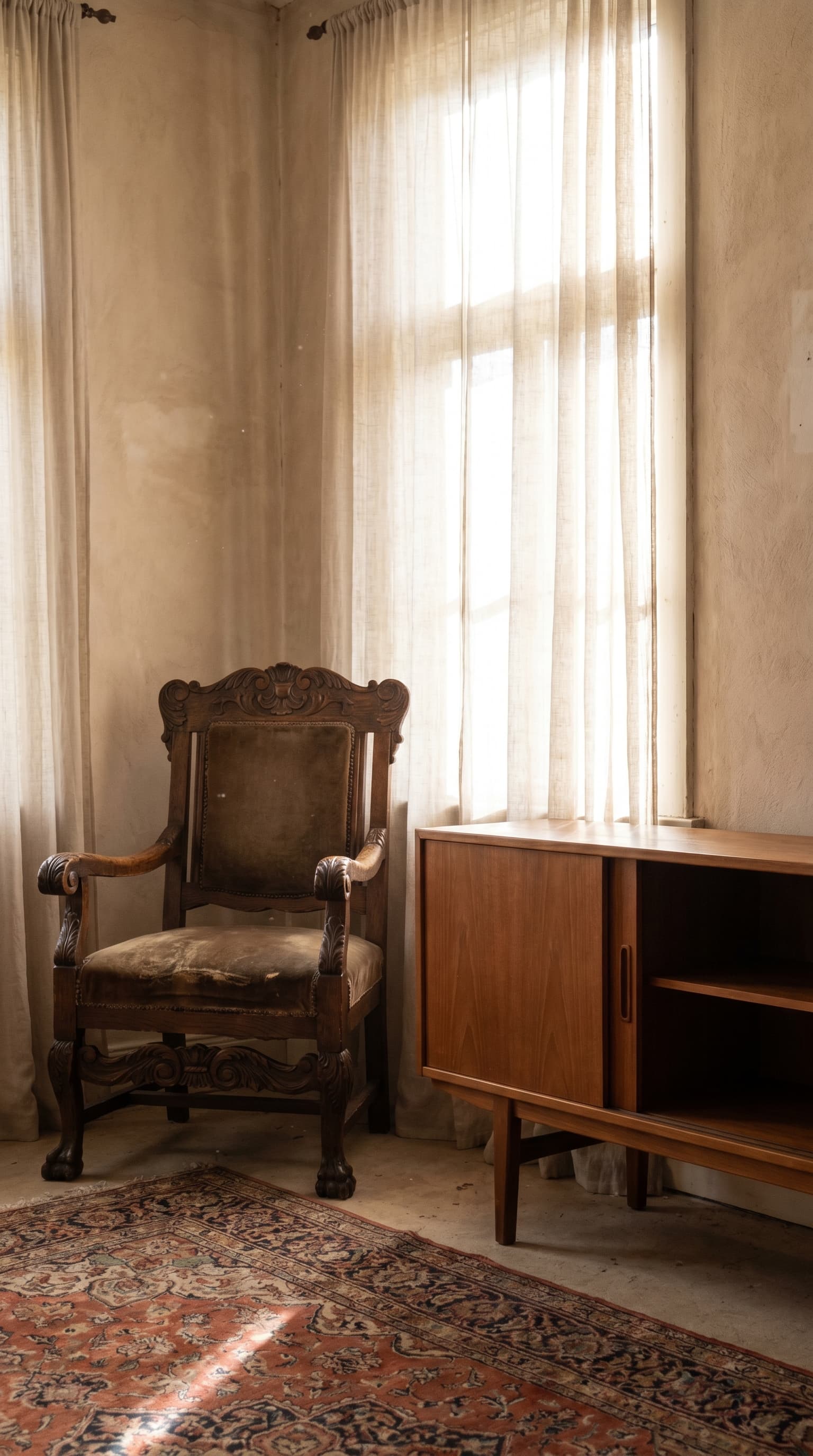
When you inherit a dresser or spot a sideboard at an estate sale, the first question usually isn't about style—it's about what to call it. The difference between antique vs vintage furniture isn't just semantics. Labels affect value estimates, insurance coverage, resale platforms, and how seriously other collectors take your piece.
The core distinction comes down to age. Antique furniture is generally 100 years old or older, while vintage furniture falls between roughly 20 and 99 years old. But nailing down the actual age of your piece—and knowing which visual clues support that date—requires more than a guess.
What You're Actually Trying to Name
Most people use "antique" and "vintage" interchangeably until money or credibility enters the picture. Then the difference matters.
Antique furniture (100+ years old) includes pieces made before approximately 1924. This covers everything from Colonial-era chests to Victorian parlor chairs to early Arts and Crafts oak tables. The term carries weight in appraisal circles, qualifies pieces for certain auctions, and often commands higher prices—though condition and maker still matter more than age alone.
Vintage furniture (roughly 20–99 years old) spans mid-century modern sideboards, Art Deco vanities, 1970s campaign dressers, and even some 1990s designer pieces. Vintage doesn't mean "old junk." Eames, Heywood-Wakefield, and Lane can fetch serious money. But the label sets different expectations for patina, materials, and market.
The 100-year threshold isn't arbitrary. It aligns with customs definitions, antique dealer associations, and insurance underwriting standards. Cross that line and your piece enters a different valuation category.
Visual Clues That Separate Antique vs Vintage Furniture
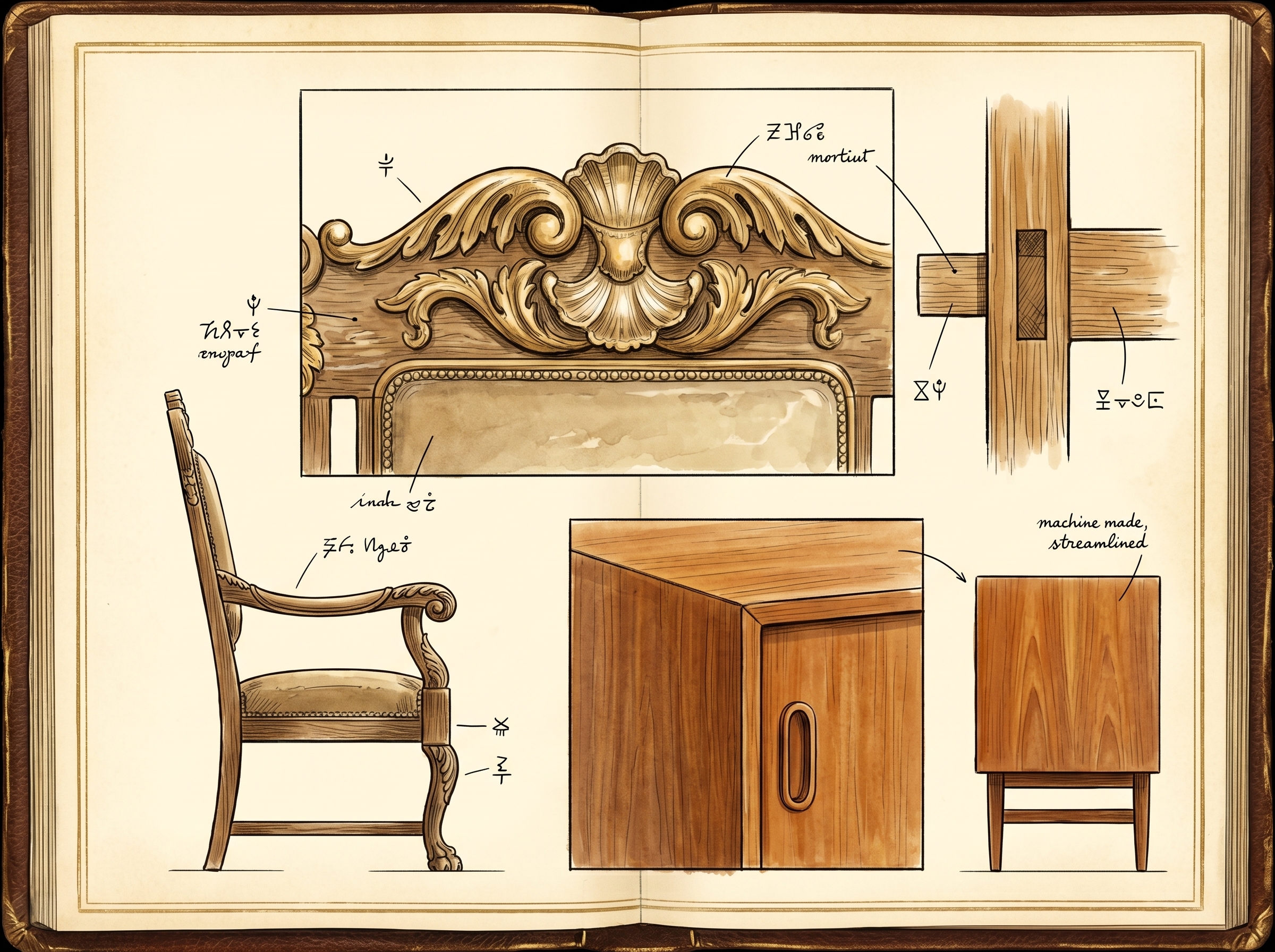
Age alone doesn't show up in photos—construction details do. Here's what to examine when you're trying to place a piece on the timeline.
Hand-cut dovetails and joinery
- •Antique indicators: Irregular, slightly uneven dovetail pins; hand-planed surfaces; mortise-and-tenon joints secured with wooden pegs or hide glue.
- •Vintage indicators: Machine-cut dovetails with uniform spacing; routed edges; staples or modern glue in joints.
Wood and lumber characteristics
- •Antique indicators: Thick, wide boards with irregular thickness; circular saw marks or hand-plane marks on unexposed surfaces; secondary woods like poplar or pine in drawer boxes.
- •Vintage indicators: Thinner plywood or veneer construction; bandsaw marks; particle board or MDF in cheaper pieces after the 1960s.
Hardware and fasteners
- •Antique indicators: Hand-forged or cast brass pulls; irregular screw slots; square-headed nails; locks with skeleton keys.
- •Vintage indicators: Stamped or chromed hardware; Phillips-head screws (post-1930s); plastic or Bakelite pulls; decorative elements like atomic starbursts or streamlined handles.
Finish and patina
- •Antique indicators: Shellac or hand-rubbed oil finishes; oxidized or crazed surfaces; uneven wear consistent with a century of handling.
- •Vintage indicators: Lacquer or catalyzed finishes; Formica or laminate surfaces; wear patterns that reflect 20th-century use (less dramatic aging).
Style and design language
- •Antique indicators: Victorian carving, Queen Anne cabriole legs, Empire columns, Gothic Revival arches, Eastlake incised decoration.
- •Vintage indicators: Mid-century tapered legs, Art Deco geometric inlays, Danish modern teak, space-age plastics, Memphis Group color blocking.
No single clue proves age. But when joinery, materials, hardware, and style align, you can confidently place a piece in the antique or vintage range.
Where People Get Confused
Several common scenarios blur the antique vs vintage furniture line.
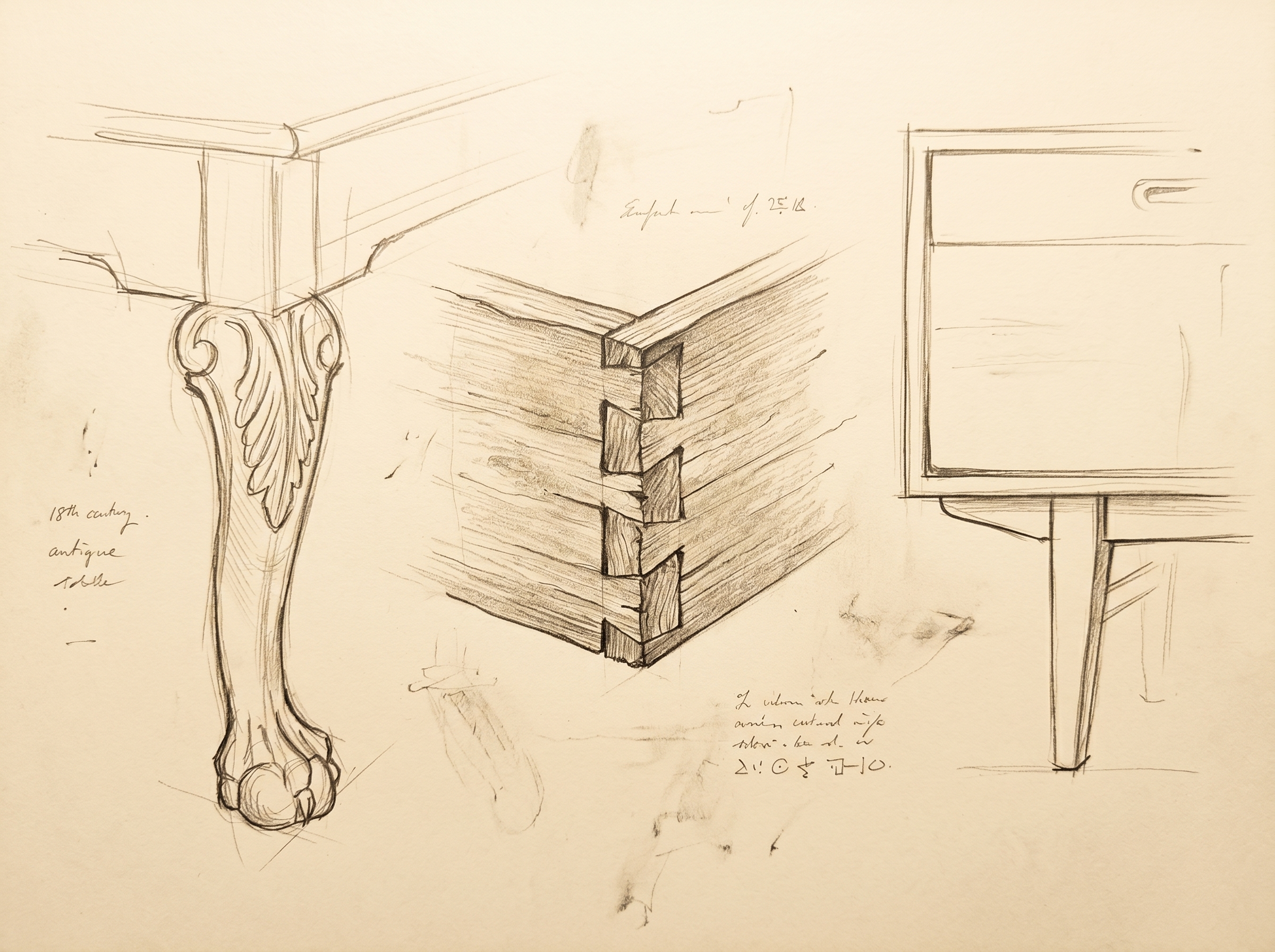
Reproductions and revivals. A Colonial Revival piece made in 1920 looks like an 18th-century original but misses the antique threshold by a few years. A 1980s Chippendale reproduction might fool buyers at a glance, but machine dovetails and plywood backs give it away. If the style predates the construction by a century, you're looking at a revival or repro—not an antique.
Refinished or heavily restored pieces. Antique purists debate whether a 1910 dresser stripped and refinished in 1985 still counts as antique. Legally, yes—the frame and structure remain 100+ years old. But aggressive refinishing can hurt value and muddy authentication. Antique furniture research often hinges on original finish clues, so stripping them off complicates things.
Transitional decades. Furniture made between 1920 and 1940 straddles the antique/vintage divide depending on the current year. A 1925 dresser qualifies as antique today, but a 1930 piece won't cross the threshold until 2030. When you're shopping or selling near the 100-year mark, specificity matters.
Mixed construction. Sometimes an antique base gets a vintage top, or a vintage piece incorporates salvaged antique hardware. When components span eras, classification depends on which part dominates. A 1950s table base with a reclaimed 1880s plank top is still a vintage table—unless the top defines the piece's identity and value.
Retro vs vintage. "Retro" describes new items styled to look old. A 2015 sideboard mimicking 1960s design is retro, not vintage. The difference matters when you're trying to estimate value or authenticate a find.
How Photo Identification Helps You Classify Furniture
You don't need an appraiser to determine if your piece qualifies as antique or vintage. Photo-based identification tools can narrow it down fast by analyzing the visual details that correspond to age.
Start with clear photos of joinery. Flip drawers over and photograph dovetails. Capture any visible saw marks or planed surfaces inside cabinets. Photograph hardware close-up, including screw heads and any maker's marks.
Next, document the wood itself. Photograph the back, bottom, and any unexposed surfaces where you can see raw lumber. Thick, wide boards suggest antique construction. Thin plywood or particle board points to vintage or later.
Finally, capture the overall form and decorative details. Legs, handles, inlays, and proportions all signal era. A single photo showing the whole piece plus detail shots of joinery and hardware gives identification tools—and human experts—the context they need.
Tocuro's photo identification compares your images against known examples and market data to estimate age ranges, style categories, and value. Upload shots of your furniture and get a classification that accounts for construction details, not just surface style. The process takes minutes, not hours, and helps you move from "I think this is old" to "This qualifies as antique" with confidence.
Once you've classified a piece as antique or vintage, you can explore more granular furniture style identification or era-specific dating to pin down exact periods and makers.
Making the Call on Your Piece
The antique vs vintage furniture distinction matters most when you're ready to value, insure, or sell. Crossing the 100-year threshold opens doors to specialized auctions, antique-only marketplaces, and different buyer pools.
But don't assume antique always means more valuable. A 1960s Eames lounge chair often outperforms a 1910 oak desk in today's market. Condition, maker, rarity, and style trends influence price more than age alone. What the label does provide is clarity—so you know which comps to reference and which platforms to use.
If you're unsure where your piece falls, take photos and let the details do the talking. Joinery, materials, and hardware tell the truth about age, even when labels and family stories get fuzzy. And once you've classified your furniture accurately, you can make smarter decisions about what it's worth and where it belongs.
Not sure if your furniture qualifies as antique or vintage? Upload a photo to Tocuro and get an age estimate based on construction details and market signals. You'll know exactly what you own—and what to call it.
Photo identification
Identify Your Furniture
Use Tocuro to identify your item from a photo and get an estimated value range when market data is available.